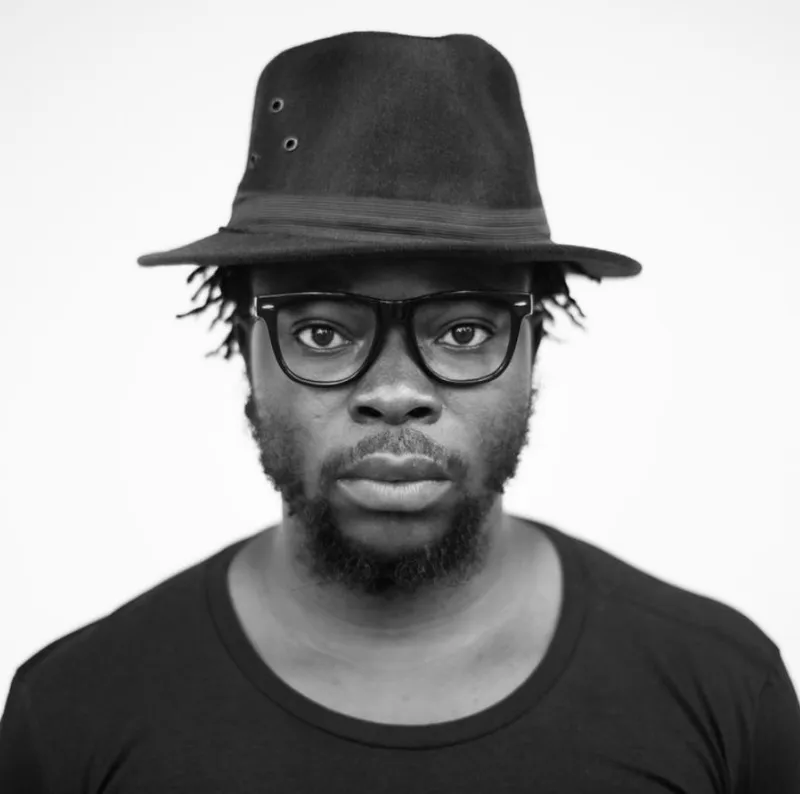
"Photography can be like a border; not a physical one, but rather a mental and emotional one."
Mário Macilau (b. 1984, Maputo, Mozambique) grew up working to support his family: the eldest son, with his father away in South Africa, he sold biscuits in the market and washed cars as a child. His path into photography began at fourteen, when with a borrowed camera he shot his first image on Maputo's Vladimir Lenin Avenue, a woman selling cassava at a street market. He started photographing seriously in 2003 with his mother's mobile phone, and became a professional in 2007, when he traded that phone for his first camera.
Macilau specialises in long-term photographic projects addressing identity, political issues, labour and environmental conditions, developed through years of engagement with socially isolated groups. His method is founded on trust: he approaches his subjects first without a camera, so that photography ceases to be a border, a mental and emotional one, and becomes a shared act. His compositions in black and white, with muted tones, natural light and deep, sometimes underexposed grounds, achieve a poetic realism that is simultaneously raw and beautiful. The series "Growing in Darkness" (2012-2016), devoted to the street children of Maputo and published as a monograph by Kehrer Verlag with texts by Mia Couto, Simon Njami and Roger Ballen among others, launched his international career; other major cycles include "Profit Corner" (2015), on the workers who live from electronic waste, and "Fé/Faith" (2015-2019), on the fading animist heritage of Mozambique. Alongside his practice he founded Walking Together, an organisation based at his Maputo studio working for children's rights and girls' access to education, and an international artist residency programme connecting visiting artists with the local community.
In 2015 Macilau was one of three artists presented in the Pavilion of the Holy See at the 56th Venice Biennale. His work featured in "A World in Common: Contemporary African Photography" at Tate Modern, London (2023), "Making Africa" at the Vitra Design Museum (2015), "Pangaea: New Art from Africa and Latin America" at the Saatchi Gallery, London (2014), "Afrique Capitales" at La Villette, Paris (2017), and "Songs of the Present" at the Musée de la Photographie de Saint-Louis, Senegal (2018), as well as at the biennales of Bamako, Lubumbashi and Beijing. In 2026 he takes part in "After the Fire. Memories, Bodies and Conflicts in Contemporary African Art" at Black Liquid Art Gallery, Rome, curated by Antonella Pisilli within the international Raw for Peace programme, where his photograph from the "Growing in Darkness" series, a Mozambican child with a Kalashnikov held to his head, stands among the exhibition's defining images: photography as testimony, refusing both accusation and aestheticization. Among his recognitions: finalist of the UNICEF Photo of the Year (2009), the UNESCO-Aschberg Bursary for Visual Arts (2014), the European Union Award for Environment (2015), selection among Foreign Policy's "100 Leading Global Thinkers" (2015), nomination for the Greenpeace Photo Award (2016) and the shortlist of the MAST Award (2019). His works are held in the permanent collections of the Centre Pompidou, Paris, and the PLMJ Foundation, Lisbon. He lives and works in Maputo.